
No audio available for this content.
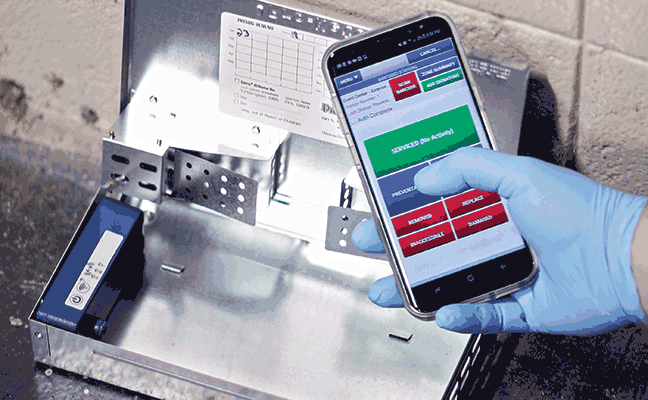
Photo: Courtesy of Pied Piper Pest, Termite & Lawn
Although many manufacturers offer sensor systems, most generally work the same way. Here’s a basic look at the technology:
- Battery-powered sensors are fastened to rodent traps. Typically, a variety of models may be used with these systems.
- When a rodent enters a station or trips a trap, it triggers the sensor. The sensor then sends a signal to a router, gateway or hub. The source of power varies by manufacturer; Wi-Fi or cellular connections are common. Extenders help ensure receipt of signals from traps placed far from the router, gateway or hub. The number of sensors per router, gateway or hub varies by manufacturer.
- The router, gateway or hub transmits the sensor signal to an internet server 24/7. From here, pest management professionals (PMPs) receive notifications regarding rodent activity, battery strength, etc.
- Data is collected and stored where PMPs have easy access to it. Most manufacturers offer portals or consoles to house the data. PMPs can generate reports, complete with easy-to-understand charts, for customers. Most systems offer the ability to analyze data and view trap locations.
[See “Rodent control: Why remote sensor technology is taking off” for the full article.]