
Listen to this content
The professional pest control industry is highly involved in our local communities, from active engagement and sponsorship in youth sports and charities to serving on non-profit boards, running civic outreach programs like food drives and donating time and material to support public health concerns.
Owners and leaders understand our companies, team members and customers benefit when we operate in healthy communities. Companies with a “give back” mindset see their community investment as part of their strategic growth plan. You can elevate your image in the area you serve, build relationships with existing and future customers, and nurture goodwill.
But no matter how much outreach you and your team might be doing, there’s always room for improvement. Consider these five elements when you want to get involved or increase your engagement with your market and community:
- Where is your heart? This may be the time to invest where your emotions already live. You may focus on something health-related (due to personal or family history) or a social cause you relate to or that inspires you.
- What do your team members care about? You can add a “lift” to what your team members are already engaged in, further aligning with and cementing your relationship with them. This may be supporting their children’s sports teams or their own passions or activities.
- When do you donate “in kind” vs. pure monetary donations? Pest management companies can have a bigger impact with their financial investment by providing one-time or recurring services to non-profit organizations or selected individuals or families in their communities. For example, TV and radio stations may have an “adopt-a-family” program, especially around the holidays, to make it easy to partner with an established program. Community and family service non-profit organizations, as well as faith-based groups, can help identify candidates as well.
- Is your time the real gift? Another consideration is to join a board or committee of a non-profit organization. They often need support in leadership, management and functional business areas. Supporting your up-and-coming managers to be involved is a way they can develop additional skills and strengthen your ties with them.
- Plan for a multi-year relationship that can evolve over time. A “one-and-done” event or giveback is better than nothing, but the real impression and effect happens when the connection is ongoing and reliable. Like anything else, it helps to touch base and see where and how you can improve. Uniting with a cause or organization you are passionate about helps fuel the arc of this time.
Case in point
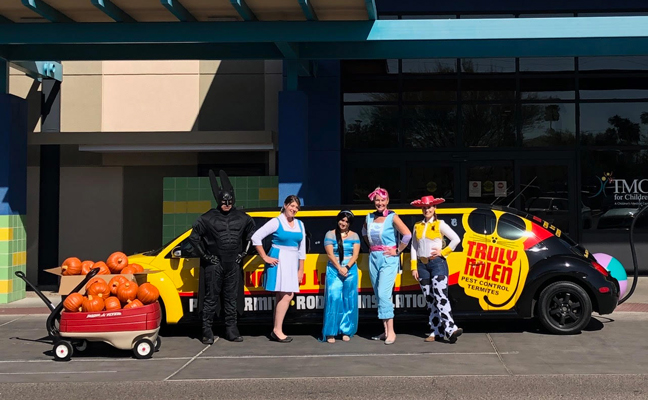
Truly Nolen of America takes pride in our deep history and culture of being actively involved in the communities we serve, coast to coast. Our signature “Truly Spooktacular” program brings craft pumpkins and goody bags filled with decorating kits, squishy Truly Nolen mouse cars and other items to children and their siblings at children’s hospitals across the country. We do this in the month of October leading up to Halloween. It started in 2014 with a few dozen craft pumpkins delivered (in costume!) to Tucson Medical Center, and has grown to more than 3,000 pumpkins delivered to 58 hospitals across 13 states and four Canadian provinces in 2025.
I was inspired to start Spooktacular after time spent with my son at a children’s hospital. Their Child Life professionals gave me the “helpful distraction” we needed to help our stay. So many of our team members have their own histories with children’s hospitals and jump at the opportunity to give back to a place so special to them. We lean into our buying power to expand the program while being mindful to the bottom line. Asking suppliers to discount rates because of the nature of the program helped get this program off the ground — and they loved to help!
Spending time with the families was a real human moment for all our team members involved. We are all proud to be part of this and to do it with one another. Over time — and through the COVID-19 pandemic — we learned how to better coordinate with the hospitals, which significantly reduces our hours needed to support this fully. Now we are growing this program through our own offices as well as through our network of service providers.