
Listen to this content
Please take a moment right now and think about the people closest to you. Now, imagine a world where maybe one of them is no longer around. Wow! Dark, right?
Along these same lines, think about these same people and imagining the impact it would have on them if you were no longer around. While this is a simple thought exercise, I am sure it’s not easy to think about someone important no longer being in your life or vice versa.
Accidents are costing companies millions of dollars in settlements, repairs, lost time and higher insurance premiums. In fact, there is an entire business sector built by companies selling safety products, and they are spending millions to peddle their wares. With all of the money going back and forth and the constant pressure on the bottom line, it is easy to miss the keys to creating a good safety culture.
Case in point
Back in 2014, Suburu did a TV commercial titled “They lived,” showing a completely demolished vehicle. You can barely make out the color, and you certainly have no idea of what model it is. Then you hear from the customers, the first responders and the mechanics. The company’s tagline followed, and the commercial simply ends.
There were no safety ratings, no highlighted features, no special financing touted — just the one scene and the emotion behind it. The automaker and ad agency understood the assignment.
Consider your approach
When you set out to create a safety culture, you have to be careful on how you frame things. Of course, the bottom line is important — after all, you’re in business to make money. But when you start your message with “We spent $X on accidents last year” or “Safety equipment cost us $x per year,” you are sending a message that the money is the most important part of that equation. I would caution anyone taking this approach.
The most important part about creating any good safety culture is your people. There is definitely a balance to be had because you need to talk about the financial side and you need to be aware of the expense and rate of occurrences. However, the numbers will always be the byproduct of a safety culture, both good and bad.
Fixing the messaging should start with your people and needs to be genuine. There is a lot going on in the day-to-day of a pest control company, but if you are not taking time to get to know your people, you are doing both them and yourself a disservice. Getting everyone home safe to their families at the end of the day should be your top priority.
An integrated strategy
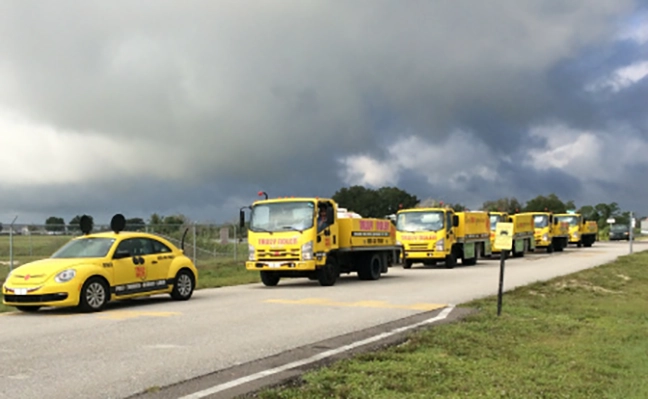
Everything we do at Truly Nolen is geared around that top priority. We have ladder safety programs because we want our team members to get home to their families tonight. We have driving behavior devices in vehicles for the same reasons.
Start by asking your team members who they are working safe for, similar to what I did at the start of this article. I have seen some branch locations where there is a board full of family photos — some couples, some with kids, some with pets. I don’t even know these people and it makes me feel good. We are human beings and we want to be part of something greater. Create an environment where people can share what’s important to them. You might be shocked by what happens.
Safety should always be about your people and not the numbers. Fix the messaging, make it about them, show them that you genuinely care, and the numbers will reflect the efforts. Let’s make sure we get everyone #HOMESAFE.