No audio available for this content.

Pest management professionals use many skills to solve ant problems quickly and efficiently. Sometimes, we even predict the weather!
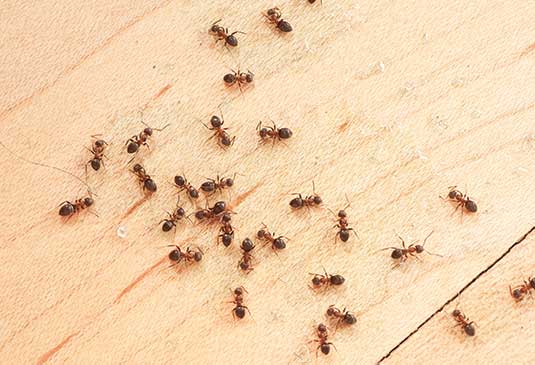
Foraging behavior for many ants is related to the weather. An ant’s decision to leave the nest and forage relies on both weather and cues from the colony. When it’s hot, ants move more quickly and require more energy/calories — thus requiring more food for the population.
But if it’s too hot, foraging ants risk dying of desiccation. And when too many food-gathering individuals are lost, this puts the colony at risk.
In cold conditions, ants will rely on stored food such as seeds and dead insects. They’ll even use other ants to store nectar or other fluids for later consumption. Little foraging behavior may be seen. Other things to consider include:
- Dominant ant species forage at optimum times of the morning; lesser species do so at irregular times.
- Nectar from plants and aphids may dry up during the day, causing ants to seek out different areas and food sources.